
November 2025
Dear reader,
I hope you are doing well.
Days are getting shorter. Plants are withdrawing into their roots and going into energy-saving modus. A great time for us to turn inward. However, the Calender shows only one Mahasi retreat in December in the Netherlands and its surroundings, namely at Panditarama Manchester. Maybe a good reason to organize something for yourself at home with a spiritual friend?
In this newsletter:
1. What the four-week retreat has brought me
2. Hatred
3. Meditation at home
4. VAT on donations?
5. Guest teachers: Sayadaw U Vivekananda and Sayalay Daw Bhaddamanika
6. Calendar
With warmest regards,
Guus Went
www.mahasi.net
1. What the four-week retreat has brought me

From June 20 to July 20, I was at Dhammaramsi Center, located in Belgium between Dinant and Namur, on retreat with two Burmese monks. The first two weeks were led by Sayadaw U Nanujjota (online from Burma), and the third and fourth weeks by Sayadaw U Thuzana (also online, from California). Both teachers were trained by Mahasi Sayadaw’s chosen successor, Sayadaw U Pandita (1921–2016).
Since January 2020, when my seventh 60-day retreat in Burma ended, I had not done any long retreats, only a few week-long retreats at Dhammaramsi.
More than ever before, it became clear to me how much these teachers focus on one’s own practice. Not theory, but pure practice. My practice has been strengthened, deepened and refreshed.
In the Mahasi method, we start with what is easiest to focus our attention on, which is the body. This can result in experiencing, for example, lightness, heaviness, movement, softness, hardness, pushing, pulling . . .
Many different mental faculties begin to light up. We are used to calling only ’thinking’ a mental faculty, but there are 52 of them! (see Abhidhamma in Practice, pp. 29 – 45) I will mention a few: energy, aiming of the mind, intention, mindfulness, concentration and rapture.
A strength and sharpness arises in the mind that can bring to light even very old, long-forgotten, or never-before-seen feelings of, for example, pride and fear (two other mental faculties).
All these physical and mental elements I call the real world – the world of suffering and the end of suffering. That is not the world of apps, mails, ‘tweets’, (‘social’) media, and the Parliament . . .
Since this retreat, I have been starting my day at home with at least half an hour of walking meditation, followed by sitting meditation. As Sayadaw U Pandita says, without that, you sometimes start with an empty battery.
In the retreats I have led since then, the participants have been able to experience the change.
And the decision has been made to do another 30 – 60 day retreat each year, under the guidance of one of the teachers. For now, I am interested in the 60-day retreat from August 31 to October 30, 2026, at the TMC (Tathagata Meditation Center) in San José, California, with Sayadaw U Thuzana and Sayadaw U Nyanavudha. I know both of them from the 60-day retreats in Burma.
2. Hatred
In the illusory world I mentioned above (that of apps, media, the Parliament etc.), we increasingly encounter the expression ‘hate mongering’. The term seems to be perpetuated by some, as something that others do (never ourselves).
BUT: when a terrorist attack is committed in which people are killed — in other words, when hate has once again reaped its harvest — those people are playing innocent, and the standard report is that ’the perpetrator’s motive is not yet known.’ How remarkable!
How, according to the Buddha, is hate sown?
The Buddha cites as the immediate cause of hatred: inappropriate attention to our annoyance at the behavior of others (Anguttara Nikaya IV, 29 – p. 1288).
Note: yes, others can behave stupidly, and yes, that can annoy us.
But when we pay appropriate attention to our annoyance, we see that someone behaves that way because their mind is disposed to do so, and that there is nothing we can do about it. (Anguttara Nikaya IV, 30 – p. 1288)
When we think this way, when we see this, we do not sow hatred (within ourselves) and we do not respond with hatred. We shut our trap, so to speak.
In a mind without hatred, there can be room for dialogue with the other person, provided we create favorable conditions for this. ‘What makes you think that way?’ Or compassion may even arise. Think of the well-known story by Sharon Salzberg, when she was told by her teacher Munindra: ‘Oh Sharon, with all the lovingkindness in your heart, you should have taken your umbrella and hit that man over the head with it!’
This topic naturally requires careful attention and is therefore more suited to a retreat than to a newsletter. In a retreat, we can strengthen our ability to think clearly and independently.
So perhaps you are curious about the Calendar at the bottom of this newsletter?
3. Meditation at home
After a retreat, participants often ask me how they can continue at home. Joining a meditation group is often mentioned. But there are also possibilities closer to home. The first thing I always mention is to give yourself a suitable, beautiful place in your home for your meditation, and for books, photos, and other objects that connect you to the Buddha, the Dhamma, and the Sangha.
Below are two examples that two yogis have sent me in the past few months.


When last week, at the end of a day, I was lying on the couch feeling depressed (filled with self-hatred), I just had enough energy left to realize that this is not what I allow myself (this being kindness!), and to go to my meditation place.
I bowed to the Buddha, and my head had not even touched the ground or I started crying. A feeling of shame arose, followed by the realization that this is a healthy mental state, and a feeling of lightness and joy came over me. It became calm inside and I realized: ‘Where is that hatred from just now? There is no hatred!’ That state lasted for a long time.
You can also look at other related activities. For me, those are jogging and yoga. Others mention Kung Fu or Tai Chi, or a particular book. In future newsletters, I would like to focus on other possibilities, how they can be experienced, and what they bring you. If you would like to share your story, you are very welcome.
4. VAT on donations?
In February of this year, we received notification from the Tax Authority that the Mahasi Sayadaw Foundation would be subject to VAT as of July 1. Tax returns must be filed quarterly. An objection can only be lodged after the first tax return, which had to be submitted by October 31 at the latest.
A yogi who is a tax lawyer has written this objection for us.
We object to VAT on donations because guiding a retreat is in itself a donation, not an economic activity, and because donations to the Mahasi Sayadaw Foundation or to the teachers are given voluntarily and are not an obligation.
We do not object to VAT on accommodation costs and groceries for meals, and all other expenses incurred by the foundation, such as travel expenses, administration, website, internet, telephone, and insurance costs.
We are awaiting the response from the Tax and Customs Administration.
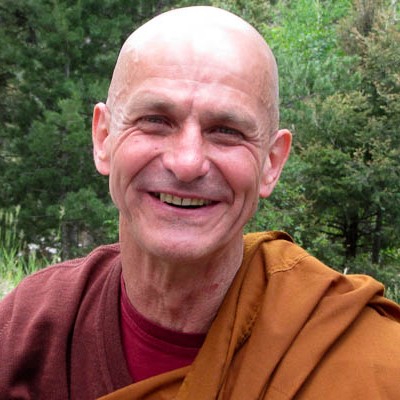
5. Guest teachers: Sayadaw U Vivekananda and Sayalay Daw Bhaddamanika

|
|